Los Angeles sits on some of the most active earthquake faults in the country, and many of the homes here were built before anyone fully understood how buildings fail when the ground moves. An earthquake retrofit in Los Angeles strengthens an older home or building so it stays on its foundation and standing during a quake. If your house was built before 1980, or you own an older apartment building with parking tucked underneath, this is worth understanding now rather than after the next big one.
This guide covers which buildings are most at risk, the grant that helps homeowners pay for a retrofit, the rules that apply to older apartment buildings, and what the work actually costs.
What an earthquake retrofit actually does
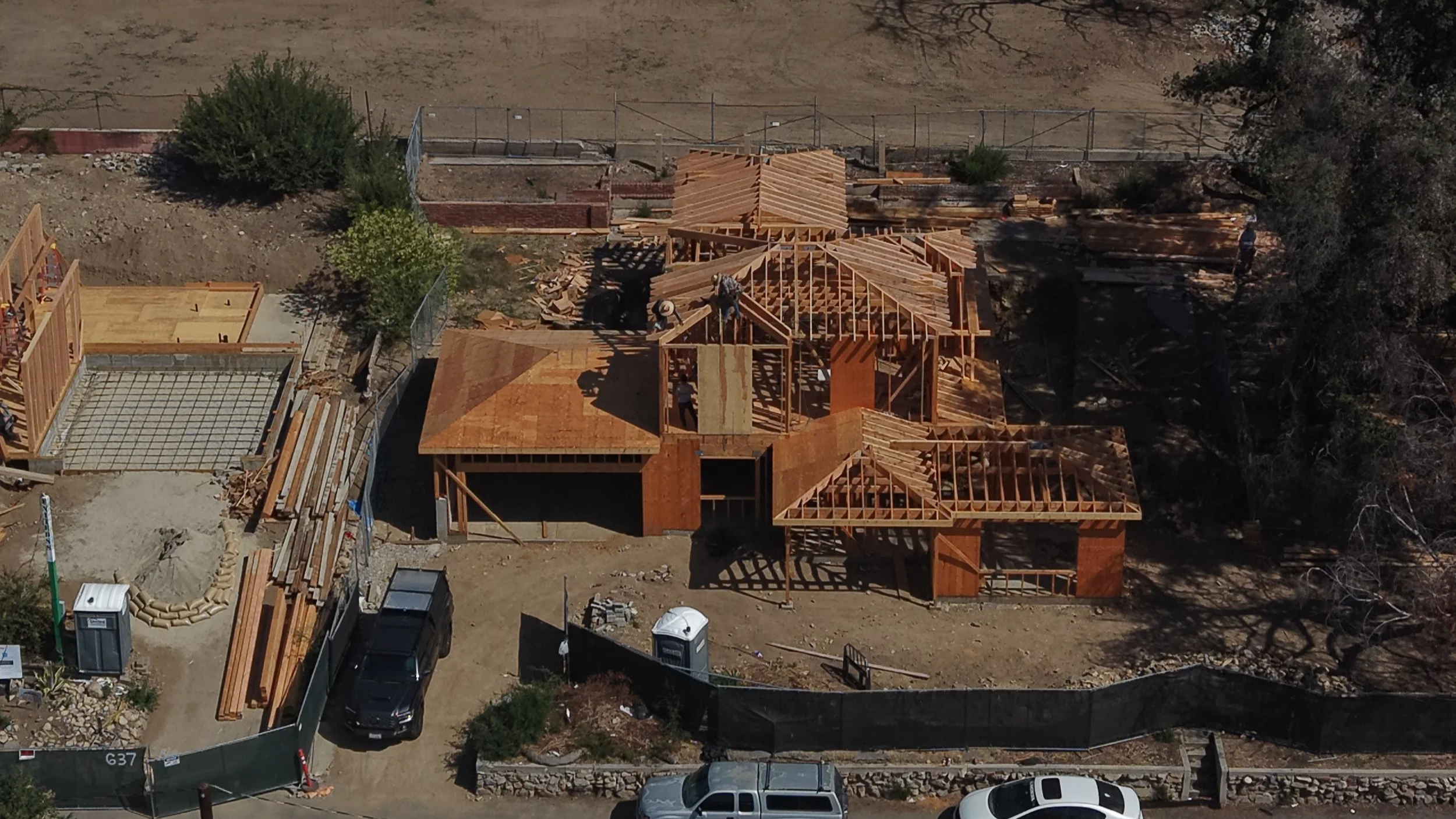
A retrofit strengthens the weak links between a structure and the ground. For a typical house, that means two things: bolting the wood framing to its concrete foundation, and bracing the cripple walls (the short wood walls in the crawl space between the foundation and the first floor) with plywood. Together, these keep a house from sliding off its foundation or collapsing at the crawl space during shaking.
For older apartment buildings, the weak point is usually a soft, or open, ground floor, often created by tuck-under parking. Strengthening those buildings is a larger structural job, typically using engineered steel frames to stiffen the open ground level.
Which homes are most at risk
Not every house needs the same work, but some are clear candidates for a retrofit:
Pre-1980 wood-frame houses on a raised foundation with a crawl space. These are the classic brace-and-bolt candidates.
Houses with tall cripple walls, homes over garages, and hillside homes, where the connection to the foundation is doing a lot of work.
Homes on a concrete slab are a different case. The brace-and-bolt approach is for raised foundations, so slab homes have their own considerations.
Hillside homes deserve special attention here, because the foundation and structural connections carry unusual loads. If you own one, our guide to what inspectors check on hillside homes is a useful companion.
The Earthquake Brace + Bolt grant for homeowners
California runs a grant program that can cover much of the cost of a standard house retrofit. The Earthquake Brace + Bolt (EBB) program is administered by the California Residential Mitigation Program (CRMP), a joint authority of the California Earthquake Authority and the California Governor’s Office of Emergency Services. It offers up to $3,000 toward a standard brace-and-bolt retrofit for qualifying homes, with supplemental funds available for income-eligible households.
Homes generally qualify if they are:
Wood-frame construction, built before about 1980.
On a raised foundation with a crawl space, not a slab.
Located in a participating ZIP code.
Not already retrofitted.
In recent cycles, eligibility expanded to include non-owner-occupied (rental) homes, which is useful for small landlords. Registration opens during set periods rather than year-round, and homeowners apply and check eligibility at EarthquakeBraceBolt.com, then use a licensed contractor to do the work. Because a standard brace-and-bolt retrofit on a straightforward house often costs only a few thousand dollars, the grant can offset a large share of it. Complex homes, including hillside properties and those with tall cripple walls, cost more.
Grant amounts, ZIP codes, and registration dates change over time, so verify the current details on the official program site before you plan around them.
If you own an older apartment building: the soft-story mandate
Many cities across the Los Angeles area require mandatory soft-story retrofits for older wood-frame buildings with weak or open ground floors. These are separate local programs, each on its own clock, which is where owners get confused:
City of Los Angeles. Under Ordinance 183893 (with follow-up Ordinance 184081), the city identified roughly 13,500 wood-frame soft-story buildings and issued orders to comply, largely in 2016 and 2017. From the order, owners had about 2 years to submit plans, 3.5 years to pull permits, and 7 years to complete construction. Most of those deadlines have now passed, so if you bought a building that was never retrofitted, it may be out of compliance. You can verify a building’s status through the LADBS property activity report.
Other cities. Santa Monica, West Hollywood, Pasadena, Beverly Hills, and others run their own soft-story programs with their own deadlines, some as recent as 2025 and 2026, and their own technical standards.
Because these rules are strictly local, confirm your building’s obligation with the building department for the city it sits in. A soft-story retrofit is an engineered structural project, considerably larger and more expensive than a single-family brace-and-bolt, so it starts with a structural evaluation and a real scope.
What a retrofit costs in Los Angeles
Cost depends entirely on the building, so these are planning ranges, not quotes:
Single-family brace and bolt: often in the low thousands for a straightforward house, which the EBB grant can offset substantially. Hillside homes and houses with tall cripple walls cost more.
Soft-story apartment retrofit: varies widely with building size and the number of units, and typically runs into the tens of thousands or more. An engineered scope is the only way to get a real figure.
The right next step is a structural evaluation so the work is based on your actual building, not a generic estimate.
Why it is worth doing beyond compliance
A retrofit is not just a box to check. For a homeowner, it is the difference between a house that stays livable after a quake and one that slides off its foundation. For a building owner, it protects the investment and the people who live there, and it addresses a known liability. Seismic strengthening is one of the highest-value things you can do to an older Los Angeles property, and it is far cheaper to do before an earthquake than to repair after one.
Common mistakes to avoid
Assuming a slab-foundation home qualifies for a brace-and-bolt grant.
Missing the EBB registration window, which is only open at certain times.
Buying an older apartment building without checking its soft-story compliance status first.
Treating a mandatory retrofit as optional, or as a do-it-yourself project.
Hiring a contractor without seismic and structural experience and without proper engineering.
Frequently Asked Questions
How much does an earthquake retrofit cost in Los Angeles? A standard single-family brace-and-bolt retrofit often costs a few thousand dollars, and the Earthquake Brace + Bolt grant can offset much of it. Hillside homes cost more, and engineered soft-story retrofits for apartment buildings typically run into the tens of thousands or more.
What is Earthquake Brace + Bolt, and does my home qualify? It is a California grant program offering up to $3,000 toward a standard house retrofit. Homes generally qualify if they are wood-frame, built before about 1980, on a raised foundation, in a participating ZIP code, and not already retrofitted. Check current eligibility at EarthquakeBraceBolt.com.
Is an earthquake retrofit mandatory in Los Angeles? For most single-family homes it is voluntary. For older wood-frame soft-story buildings, the City of Los Angeles and several surrounding cities require mandatory retrofits under local ordinances, each with its own deadlines, so check with your city.
Does my home need a retrofit if it is on a slab foundation? The brace-and-bolt retrofit is designed for raised foundations with a crawl space. Slab-on-grade homes have different structural considerations, so a professional evaluation is the best way to know what, if anything, your home needs.
How long does a retrofit take? A straightforward single-family brace-and-bolt can often be done in a matter of days to a couple of weeks. An engineered soft-story retrofit on an apartment building is a larger project measured in months.
Protect your home before the next quake
Whether you own a pre-1980 house or an older apartment building, a seismic retrofit is one of the smartest investments you can make in an earthquake-prone city. The key is to base the work on a real structural evaluation, take advantage of grant funding where you qualify, and confirm any mandatory requirements with your local building department.
We have been building in Los Angeles since 1989, we are led by a former LA Construction Inspector, and structural work is at the core of what we do. If you want to understand what your home or building needs, call us at (213) 948-5297 or book a consultation, and we will give you an honest assessment.